



Momo vs Dumpling vs Gyoza: What's Actually Different
Published
Frequently Asked Questions
Are momos dumplings?
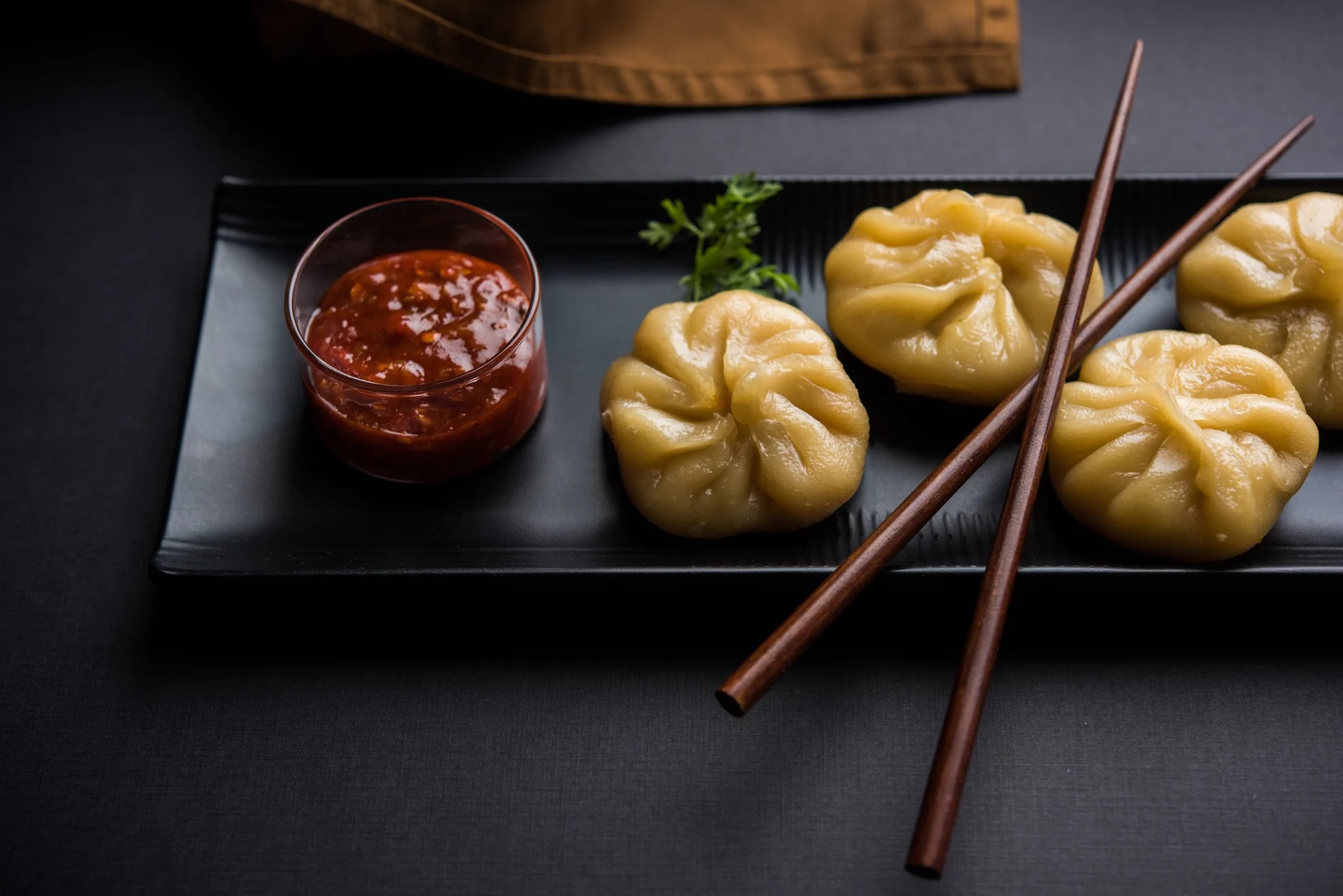
Yes. Momo is a Nepali dumpling. "Dumpling" is the broad category, dough wrapped around a filling, and momo is one member of it, alongside gyoza, jiaozi, wontons and many others.
What's the difference between momo and gyoza?
Momo is Nepali, with a thicker hand-rolled wrapper, a coarser filling spiced with ginger, garlic, cilantro and cumin, usually steamed and dipped in a tomato-and-sesame achar. Gyoza is Japanese, with a very thin wrapper, a finely minced filling seasoned with garlic and sesame oil, pan-fried on one side and dipped in soy and vinegar.
Is momo Chinese or Nepali?
Nepali. The dumpling form reached Nepal from Tibet, where a related dumpling is called mog mog, but the spicing and the tomato-sesame achar that define momo today are Nepali.
Is a potsticker the same as a momo?
No, though they're cooked similarly. A potsticker is a pan-fried Chinese jiaozi with a soy-based dip. The Nepali equivalent preparation is kothey momo, half-steamed, then pan-fried on one side, which is served with achar instead.
Which is healthier, momo or gyoza?
Steamed momo is generally the lighter option, because it's cooked without oil. Pan-fried gyoza and fried momo both add fat in the cooking. Filling and portion size matter more than which cuisine it came from.
Is momo spicier than gyoza?
The dumpling itself usually isn't hot. The heat is in the achar, which you control by how much you use. So momo can be as mild or as fierce as you want, while gyoza's soy dip is consistently mild.
What is achar?
Achar is the Nepali sauce served with momo, cooked tomato blended with toasted sesame, dried chili and garlic. It's thick, tangy and roasted, and it's the main thing that distinguishes eating momo from eating any other dumpling.