




Biryani Goat
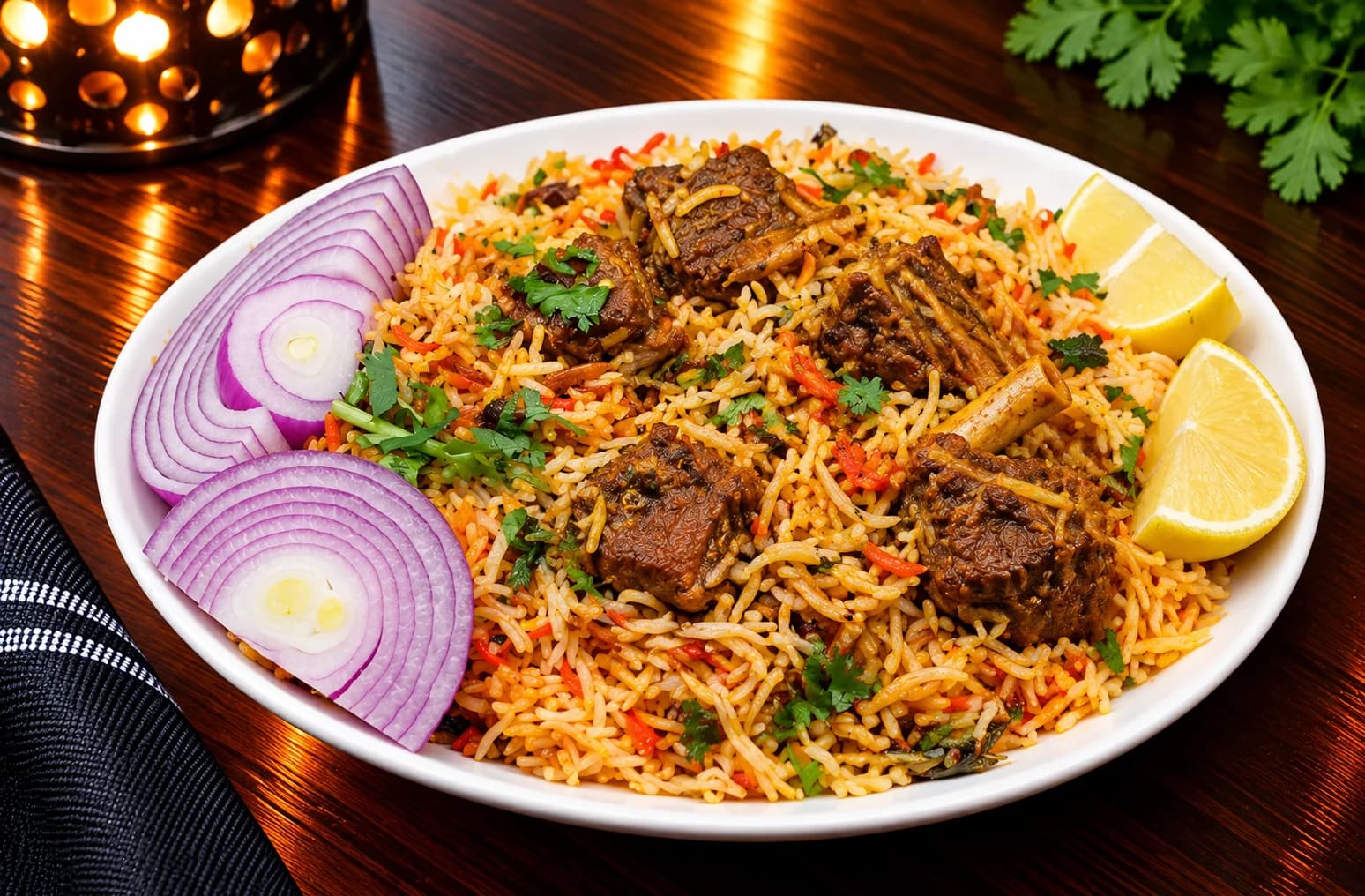
If you grew up eating biryani, this is probably the one you mean by the word. Across India, Pakistan, Nepal and Bangladesh, goat — usually called mutton — is the standard biryani meat. Lamb and chicken are what most American restaurants default to; goat is what the dish is built on at home.
Why goat. It's leaner than lamb with a deeper, more distinctly savory flavor — less fatty richness, more actual meat character. And it's almost always cooked bone-in, which matters more than it sounds. Bones and marrow release gelatin and flavor into the pot over a long cook, and in a sealed dum that all travels upward into the rice. The layers directly above the meat end up carrying a concentration you can't achieve with boneless anything. That's the argument for goat biryani, and it's why people who know the dish order it over lamb.
The method. Goat is marinated in yogurt, ginger, garlic, garam masala and chili, often overnight — the acid in the yogurt starts tenderizing before heat enters the picture, which goat needs more than lamb does. Partially cooked long-grain basmati is layered over it with fried onions, mint, coriander and saffron-steeped milk. The pot is sealed so nothing escapes and cooks slowly over low heat. Nothing is stirred. When the seal breaks, the rice is in separate grains — white, gold, deep orange — and the bottom layers taste noticeably different from the top.
How it compares to lamb biryani. Lamb is richer and fattier with a softer, sweeter flavor; goat is leaner, firmer and more savory. Lamb is the easier introduction; goat is the more traditional and, to a lot of palates, the more interesting. If you've had both and preferred lamb, that's a legitimate preference, not a failure of nerve. If you've only had lamb, this is worth ordering once.
About the bones. Goat biryani is served bone-in, which is how it should be — the bones are where much of the flavor comes from. It means eating a little more slowly and watching for small bones, and it's worth mentioning if you're ordering for children. Ask when you order if you'd prefer it boneless and we'll tell you what the kitchen can do.
How spicy is it? Medium to hot, and deeper rather than sharper — the heat sits behind the spices rather than in front of them. We cook to a 1–10 scale, so name your number. Goat stands up to heat well, so this is a reasonable one to push if you want it hot.
What it comes with. Raita, which does real work against rich spiced rice. A squeeze of lemon lifts it too. No bread needed — biryani is a complete dish, and naan alongside usually leaves you with leftovers.
Portion. Generous, though note that bone-in weight means slightly less meat per order than the boneless versions. Still a full meal for one with some left over.
Dietary notes. Contains goat and dairy — yogurt marinade, saffron milk, raita. Not gluten-free if fried garnishes are used; ask if it matters. Our goat is halal; confirm with the location when you order if that's important to you.
Takeout and catering. Biryani is made to be transported, and goat biryani is frequently better the following day once everything settles. It's among our most-requested catering trays in Charlotte for Eid, weddings and family gatherings — for many households it's the dish that's expected on the table rather than one option among several.
Available at all Curry Gate locations — Uptown at 101 N Tryon St, South Blvd, and West 24th Street — for dine-in, pickup, delivery and catering.
