




Biryani Shrimp
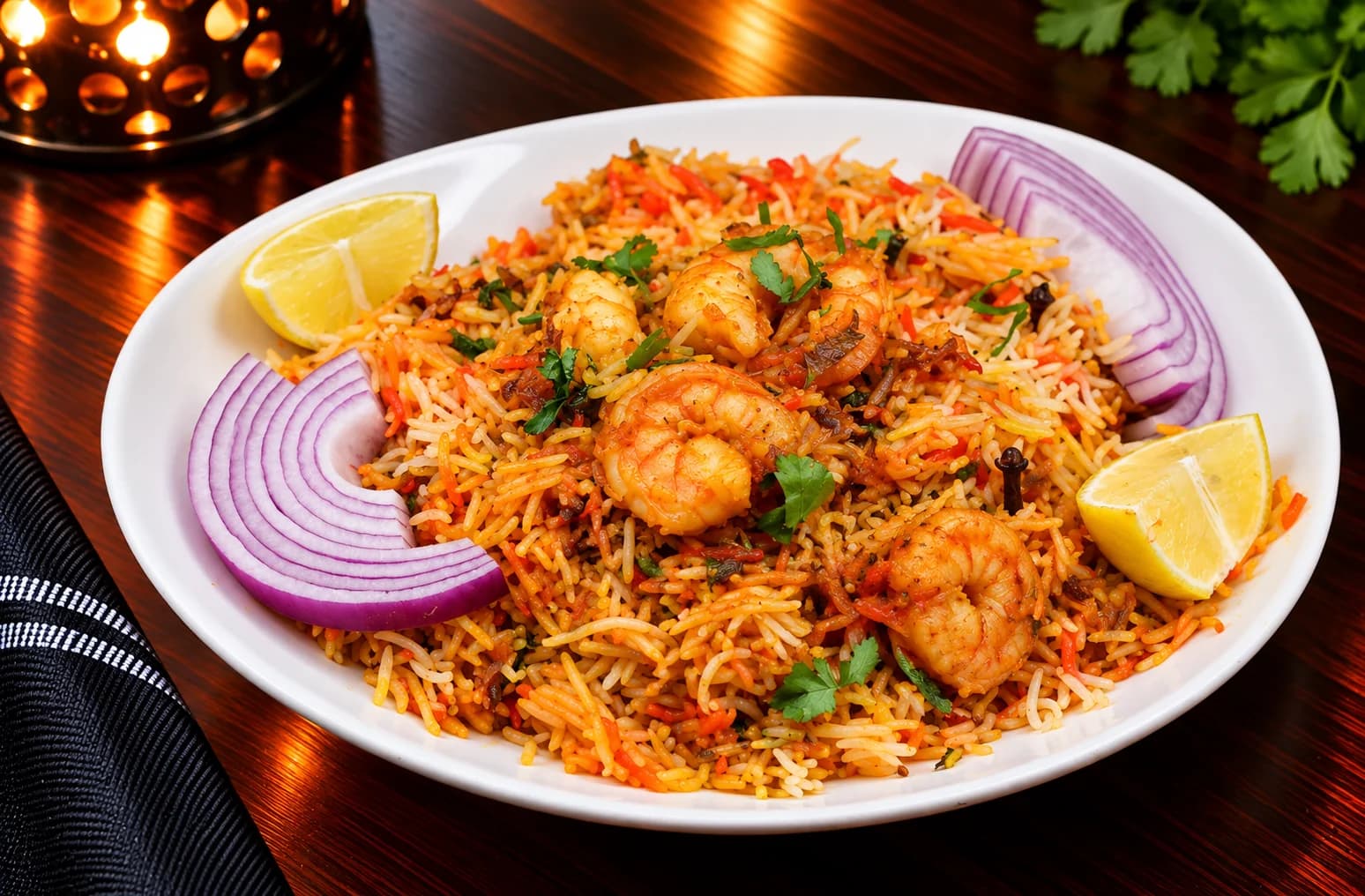
The lighter one, and the hardest to get right.
Why timing is everything here. Chicken biryani forgives you. Chicken can sit in a sealed pot over low heat and come out better for it. Shrimp cannot — it goes from tender to rubbery in about ninety seconds, and once it's there nothing brings it back. So the method has to change. The shrimp is marinated in yogurt, turmeric, chili and ginger-garlic, seared briefly, and layered in late so it finishes in the residual steam rather than cooking through the full dum. Done properly it comes out plump and just-set. That's the whole challenge of this dish, and it's why a lot of places don't put shrimp biryani on the menu at all.
The biryani underneath. Same method as the rest of our biryanis. Partially cooked long-grain basmati is layered with fried onions, fresh mint, coriander and saffron-steeped milk, the pot is sealed so no steam escapes, and it cooks slowly over low heat — dum. Nothing is stirred. The rice comes out in separate grains, some white, some stained gold, each carrying a different concentration of spice, so a spoonful from one part of the bowl doesn't taste identical to another.
How it differs from the chicken version. Shrimp is sweeter and much more delicate than chicken, so the spicing is dialed back to let it through. Where chicken biryani is rich and assertive, this one is lighter and cleaner — closer to the coastal biryanis of Kerala and Hyderabad, where seafood is the norm rather than the substitute. If you find chicken biryani heavy, or you're eating in summer, this is the one.
How spicy is it? Medium, and aromatic rather than sharp. We cook to a 1–10 scale, so tell us where you want it. Worth knowing: pushing shrimp biryani to the hot end tends to bury what makes it good. We'd suggest keeping this one at a 4 or 5 and ordering something else if you want serious heat.
What it comes with. Raita. Cool cucumber yogurt against warm spiced rice is the traditional pairing and it works, particularly if you've asked for extra heat. A squeeze of lemon over the top is worth doing too — the acid lifts shrimp the way it does any seafood. You don't need bread; biryani is a complete dish on its own.
Portion. One order is a full meal for one person with some left over, or a share between two if you're ordering other dishes as well.
Dietary notes. Contains shellfish — the most common serious food allergy, so flag it clearly if you're ordering for a group. Also contains dairy from the yogurt marinade, the saffron milk and the raita. Not gluten-free if fried garnishes are included; ask if that matters. Pescatarian-friendly, and the only seafood biryani on our menu.
Takeout. Biryani travels well as a rule, but shrimp is the exception worth noting: it keeps cooking in a hot sealed container, so eat this one sooner rather than later. If you're reheating leftovers, go gently and briefly — a hot pan for a minute, not a long spell in the microwave.
Available at all Curry Gate locations — Uptown at 101 N Tryon St, South Blvd, and West 24th Street — for dine-in, pickup, delivery and catering.
