




Malai Kofta
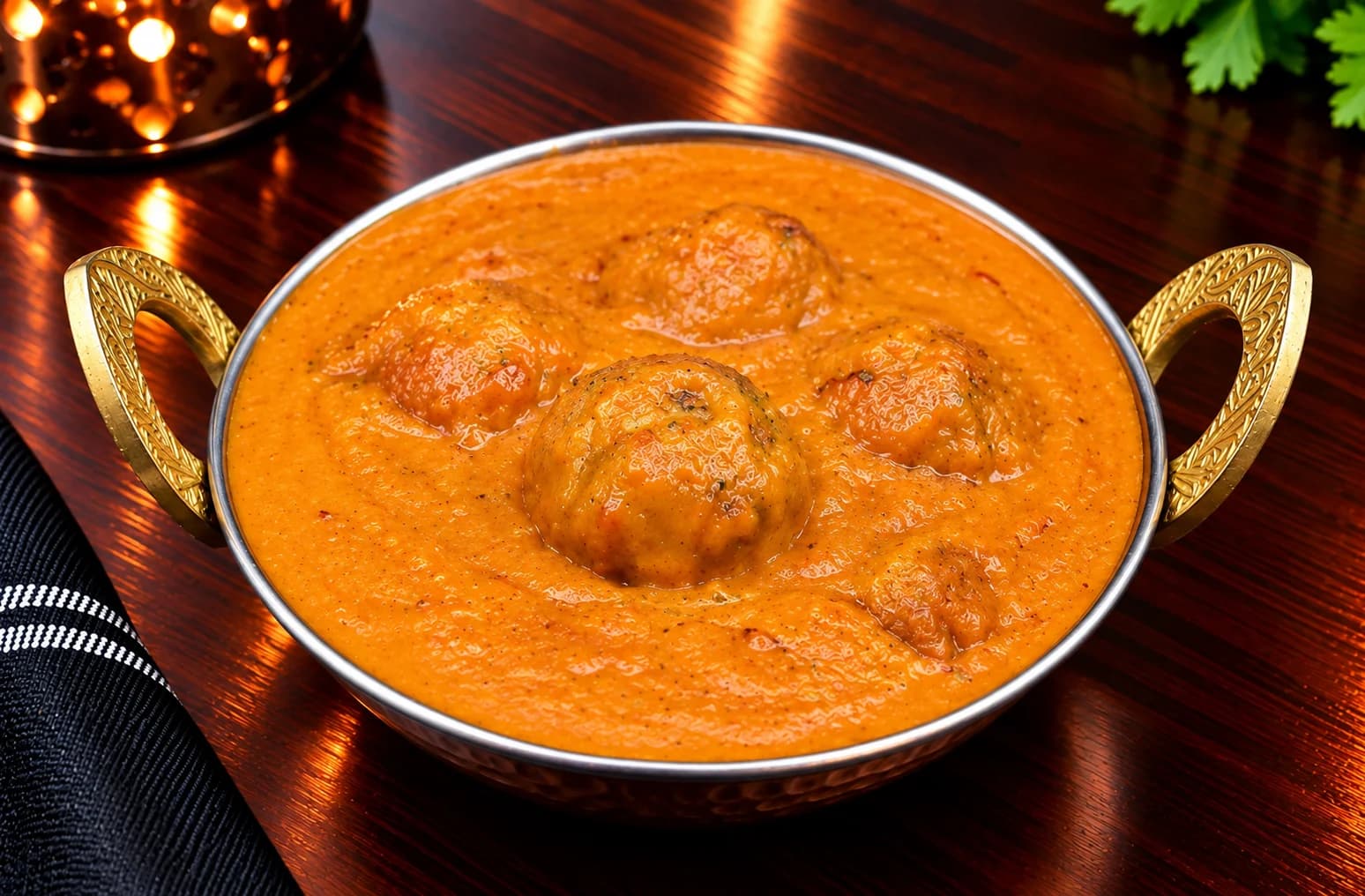
The vegetarian dish that doesn't apologize for itself.
What it is. Malai means cream, kofta means dumpling. The koftas are made from fresh paneer and boiled potato, mashed together with a little cornstarch, sometimes studded with raisins and chopped cashews, rolled into balls and fried until golden. The gravy is separate: onion and tomato cooked down with ginger and garlic, blended smooth with soaked cashews, then enriched with cream and warm spices — cardamom, a little garam masala, sometimes a pinch of saffron. The koftas go in just before serving.
Why they go in last. This matters, and it's the difference between good malai kofta and disappointing malai kofta. Fried koftas start absorbing sauce the moment they're submerged, and left too long they turn soft and eventually fall apart. Added at the end they stay intact, with the outside softening just enough to take on the gravy while the center keeps its texture. It's also why malai kofta is better eaten at the restaurant than reheated the next day — the koftas don't survive a second round.
How it tastes. Rich, creamy and mild, with a faint sweetness from the cashews and the raisins in the kofta. The gravy is smooth and thick, closer in character to a korma than a tomato curry. There's very little heat. If butter chicken is the dish that converts people to Indian food, malai kofta does the same job for anyone eating vegetarian.
Malai kofta vs. paneer butter masala. Both are creamy, mild and tomato-based, so they get confused. Paneer butter masala is cubes of paneer in a makhani gravy — firm cheese, distinct pieces. Malai kofta is a soft dumpling of paneer and potato, so the texture is completely different: yielding rather than firm, and richer because of the potato and the frying. If you want to taste the paneer as cheese, order paneer butter masala. If you want something softer and more indulgent, order this.
How spicy is it? Mild, and one of the least spicy dishes we make. We cook to a 1–10 scale so it can be built up, though heat doesn't suit this dish especially well — the cream and cashew are there to be tasted. It's a good order for kids and for anyone at the table who doesn't want spice.
How to order it. Naan is the right partner — butter naan or garlic naan, something soft enough to match the gravy. Rice works too. It's rich enough that it's better as one dish among several than as a solo main; pair it with something dry like aloo gobi or something tangy like chana masala so the meal isn't all cream. Two or three koftas is a standard portion.
Dietary notes. Vegetarian. Contains dairy in both the koftas and the gravy — paneer, cream, often butter — so it is not vegan and there's no dairy-free version of this dish, since dairy is what it's made of. Contains cashews and often raisins, so not suitable with a nut allergy. Contains no meat, no egg and no gluten in the dish itself, though the koftas are bound with cornstarch or a little flour depending on the kitchen — ask if celiac.
Takeout. The one caveat on this dish. Koftas continue absorbing gravy in the container, so they arrive softer than they would at the table. Still good, just different. If you're ordering for delivery and texture matters to you, ask for the koftas packed separately from the sauce.
Available at all Curry Gate locations — Uptown at 101 N Tryon St, South Blvd, and West 24th Street — for dine-in, pickup, delivery and catering.
