



Palak
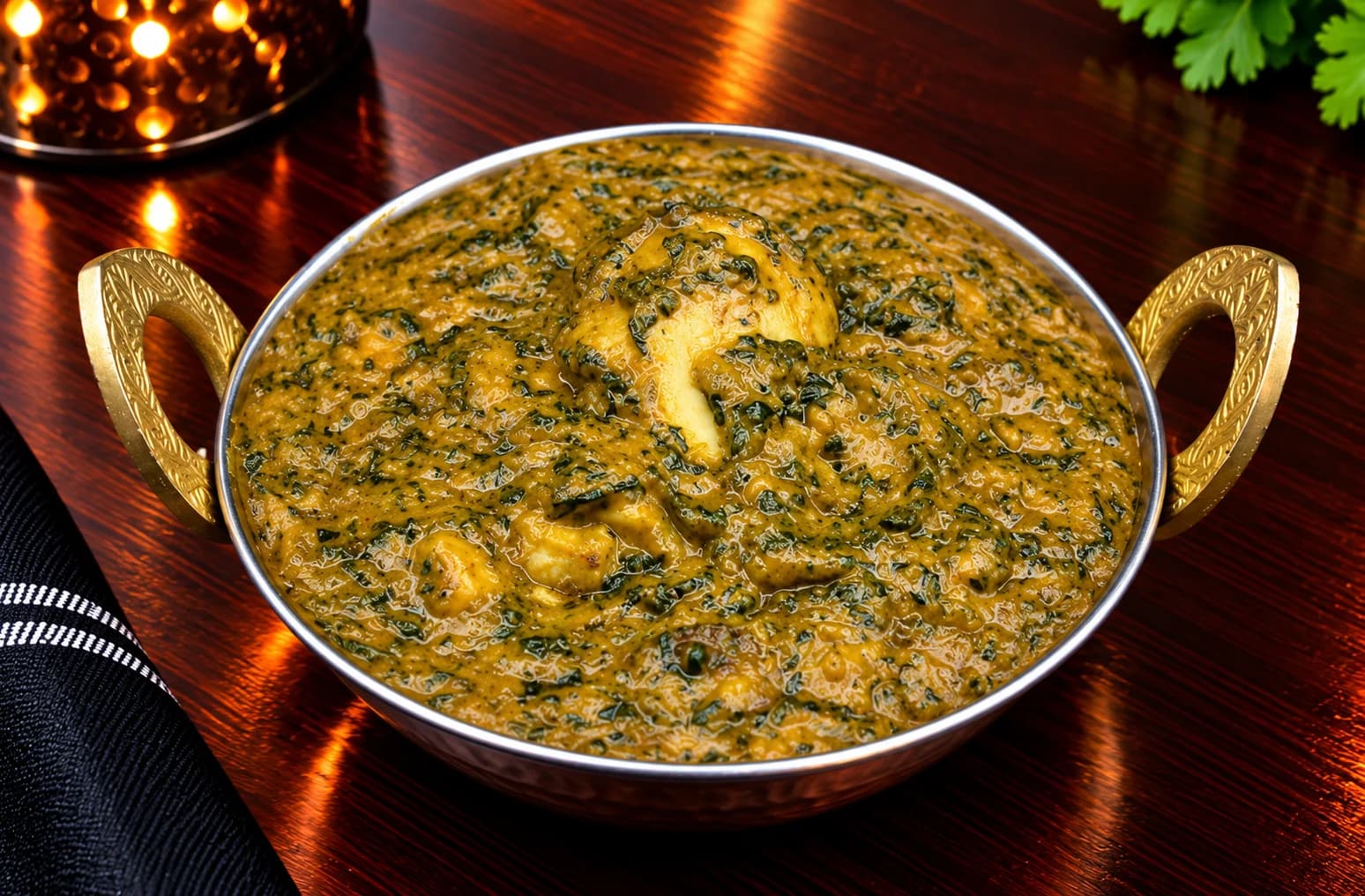
Palak means spinach, and the dish is exactly that — spinach cooked down into a gravy, with your choice of paneer, chicken, lamb or goat folded through it.
How it's made. Fresh spinach is blanched briefly and then blended, which is the step that decides everything. Blanch it too long and it goes olive-drab and tastes stewed; blanch it briefly and shock it, and it stays vivid green with the flavor intact. That green color is the honest indicator of a well-made palak — a grey-green dish has been overcooked. The purée is then cooked into a base of onion, garlic, ginger and green chili with cumin and garam masala, and finished with a little cream to round it.
For the paneer version, cubes of fresh cheese are added at the end so they stay firm and distinct against the smooth gravy. For the meat versions, the protein is cooked separately and folded through, so the spinach doesn't overcook while the meat comes up to temperature.
How it tastes. Earthy and green first, mildly warm underneath, with garlic and ginger carrying it. It's the least sweet of the mild curries — nothing like a korma or a makhani — and it tastes distinctly of the vegetable it's made from. The cream softens the edges without turning it rich. People who find most restaurant curries too heavy usually take to this one immediately.
Palak paneer vs. saag paneer. Frequently confused, and worth knowing. Palak specifically means spinach. Saag is a broader term for cooked leafy greens — often mustard greens, sometimes a mix including spinach, fenugreek or amaranth. Saag tends to be more bitter, more rustic and more textured; palak is smoother and milder. If you've had one and liked it, you'll probably like the other, but they aren't the same dish.
Which protein. Paneer is the classic — fresh cheese is mild and firm, and it contrasts with the smooth gravy without competing. Chicken works well and makes it a lighter main. Lamb and goat are richer and more assertive; they hold up to the spinach but change the balance of the dish, so it becomes a meat curry with a spinach base rather than a spinach dish with meat in it. If you're ordering palak for the first time, order it with paneer.
How spicy is it? Mild to medium. Green chili gives it a gentle background warmth rather than real heat. We cook to a 1–10 scale if you want it built up, and it takes heat reasonably well.
How to order it. Naan or roti both work, and rice is fine too. Palak is a good middle dish on a shared table — its earthiness contrasts with a rich tomato curry or a creamy one, and it keeps a meal from being all the same weight. As a solo main with rice it's satisfying and comparatively light.
Dietary notes. The paneer version is vegetarian and gluten-free. Contains dairy from the paneer and the cream finish, so not vegan as standard — ask whether the kitchen can make the vegetable version without cream, as that's usually possible and would make it dairy-free. No nuts. It's also one of the more nutritionally sound things on the menu: spinach, minimal oil, no cashew paste, and real protein from the paneer.
Takeout. Travels and reheats well. The color dulls slightly overnight, which is normal and doesn't affect the flavor. Reheat gently in a pan rather than a microwave.
Available at all Curry Gate locations — Uptown at 101 N Tryon St, South Blvd, and West 24th Street — for dine-in, pickup, delivery and catering.
