




Tandoori Chicken
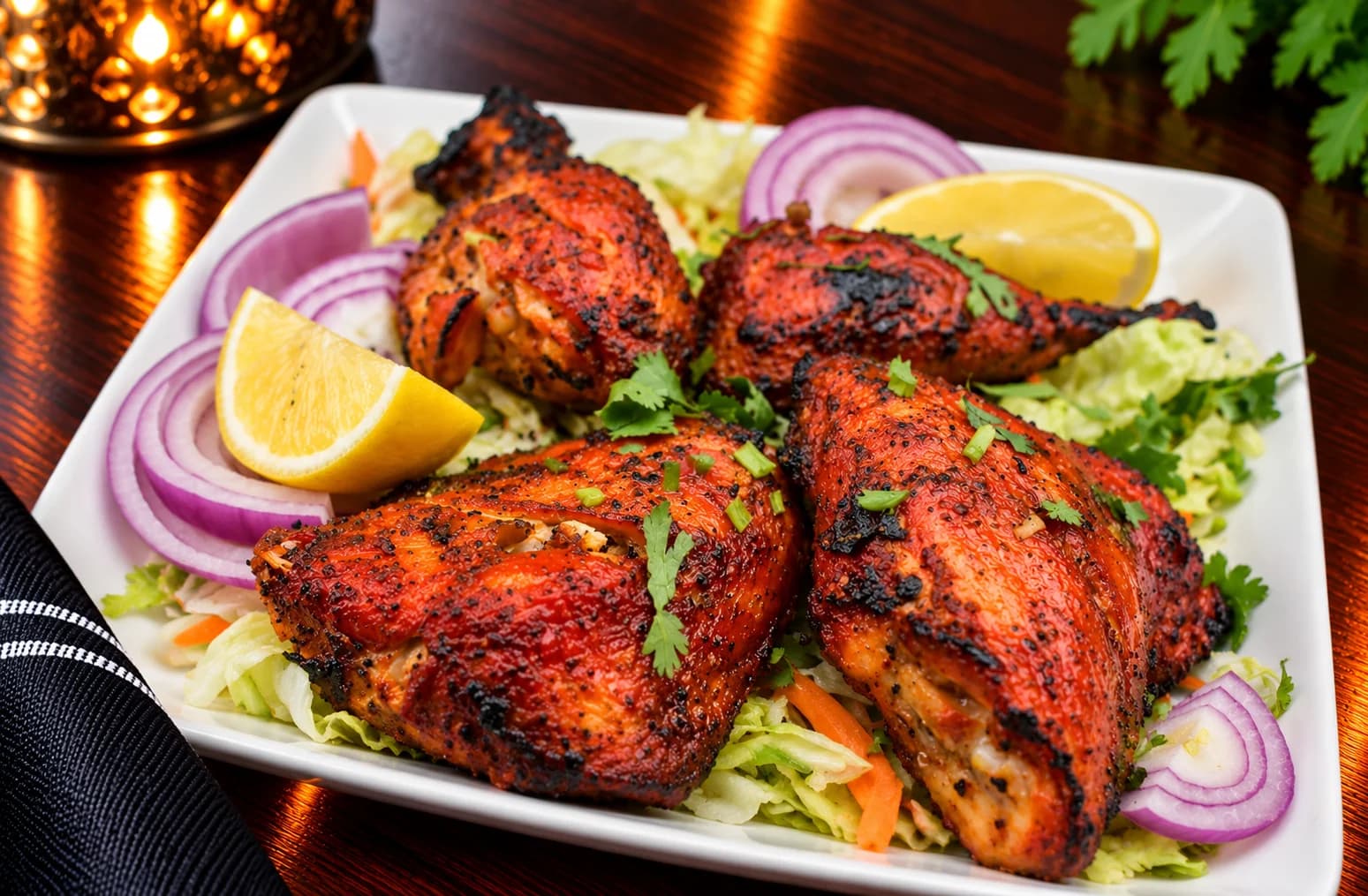
The original, and the dish that put tandoor cooking on menus around the world.
What it is. Bone-in chicken — leg and thigh, sometimes half a bird — scored to the bone so the marinade can penetrate, then marinated for hours in yogurt with ginger, garlic, lemon, garam masala, cumin and Kashmiri chili. The scoring matters: without it, the marinade sits on the skin and never reaches the meat. Then it goes into the tandoor on a long skewer and roasts at very high heat until the outside is charred and the inside is cooked through but still moist against the bone.
Why the tandoor. A tandoor is a clay oven that runs around 700°F, with coals at the bottom and the chicken suspended vertically above them. Three things happen at once: radiant heat from the clay walls, direct heat from the coals, and smoke from the fat dripping down and burning off. That's a combination no conventional oven reproduces — it's why tandoori chicken tastes smoky rather than just roasted, and why the char forms fast enough that the meat doesn't dry out getting there.
About the color. Tandoori chicken is traditionally reddish, and it should come from Kashmiri chili, which is prized for deep color and comparatively little heat. Some restaurants use food coloring to get a more dramatic red. Ours takes its color from the chili and the marinade, which means it's a natural brick-red rather than a bright artificial one.
The bone-in difference. Bone-in chicken cooked at high heat stays juicier than boneless — the bone moderates the heat and the connective tissue around it keeps moisture in. It also means the meat nearest the bone carries more flavor. The trade-off is that it's messier to eat and harder to share, which is exactly the trade-off worth making here.
Tandoori chicken vs. chicken tikka. The same oven and a related marinade, but different cuts and different dishes. Chicken tikka is boneless white meat in pieces — easier to eat, leaner, quicker. Tandoori chicken is bone-in dark meat, juicier and more flavorful, eaten with your hands. If you're sharing a starter across a table, tikka. If you want the better piece of chicken, tandoori.
How it tastes. Smoke first, then the yogurt tang, then warm spice. The charred edges are slightly bitter against the juicy meat — that contrast is the point. Mild to medium: Kashmiri chili contributes color and aroma more than burn.
How spicy is it? Mild to medium as standard. We cook to a 1–10 scale, so say where you want it. It takes heat well, though the marinade is where the character lives, so pushing it very high starts to cover what makes it good.
How to order it. It arrives with onions and lemon, and both do a job — lemon over the top lifts the char, raw onion between bites resets your palate. Mint chutney is the traditional partner and the right one; the herbal sharpness cuts straight through the smoke. Order it as a starter for the table, or as a main with rice, a dal and a roti for a meal that's substantial without being heavy.
Dietary notes. Contains dairy from the yogurt marinade. Gluten-free in itself — order rice or skip the bread if that matters. No nuts, no cream, no gravy. Grilled rather than fried, with the fat rendering off in the oven, which makes it one of the leaner mains on the menu despite being dark meat. Our chicken is halal; confirm with the location when you order.
Takeout. Best straight from the tandoor. If you're ordering for delivery, reheat under a broiler or in a hot dry pan for a couple of minutes — enough to bring the char back. Microwaving steams it and undoes the whole thing. Bone-in meat holds heat better in transit than boneless, so it travels better than chicken tikka does.
Available at all Curry Gate locations — Uptown at 101 N Tryon St, South Blvd, and West 24th Street — for dine-in, pickup, delivery and catering.
